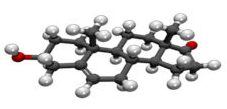
Melatonin, N-acetyl-5-methoxytryptamine, which seems to have been evolutionarily conserved since it is found in all organisms including bacteria, algae, fungi, plants, insects, and vertebrates including humans, is made from Tryptophan, an essential amino acid.
It is known for its chronobiotic, hypnotic, anxiolytic, analgesic, antidepressant and positive cognitive effects.
In humans and other vertebrates, it is predominantly released in circadian rhythm by the pineal gland, with maximum secretion at night, in the abscence of blue light.
The retinal photoreceptor cells of mammals* contain melanopsin, a blue-light-sensitive pigment. The axons of these cells do not carry visual images and do not connect to the visual cortex of the brain: they transmit information about ambient blue light to the biological clock, the “SCN” (suprachiasmatic nuclei) in the anterior hypothalamus, which stimulates the pineal gland via “sympathetic”** (norepinephrine-releasing) neurons, to trigger melatonin production. {7}
Note that while the SCN is the main driver of circadian rhythms, synchronising endocrine and neuronal pathways including melatonin secretion, there is evidence of circadian clocks outside of the SCN. The peripheral tissues of the body can secrete melatonin on their own, but the SCN directs them to achieve “optimal overall output” {3,4,5}.
Originally Melatonin was thought to be purely a pineal gland hormone, but it could also be called a vitamin, since it is present in vegetables, fruit, rice, wheat and herbs. It probably did evolve as an antioxidant vitamin, but eventually acquired autocoid (intracellular), paracoid (local tissue) and widespread hormonal properties {1}.
Also, melatonin is produced by many other organs, such as the gastrointestinal tract, which makes more melatonin than the pineal gland, secreting it mostly after meals.
Melatonin has many nonhormonal functions: it is a free radical scavenger**** (it is a powerful direct antioxidant in its own right, but it also regulates antioxidant enzymes), a tissue factor and a protective agent which prevents macromolecular damage, protects membrane lipids and nuclear DNA from oxidative damage, boosts the immune system and has anti-cancer properties {2}.
Melatonin has been shown to regulate the expression of several genes. It also influences antioxidant enzyme activity and cellular “messenger RNA” levels for the enzymes involved. It promotes sleep and assists Allopregnanolone with brain maintenance and repair.
It supports the immune system.
It reduces the toxicity and increases the efficacy of a large number of drugs: considering this, its use in combination with these agents should be investigated.{6}
Melatonin inhibits the growth of several types of cancer cells, for example human prostate cancer cells, by a mechanism which involves the regulation of androgen receptor function; but it is not clear whether other mechanisms may be involved. Experimentally, treatment of prostate cancer cells with melatonin retards the growth of both androgen‐sensitive and androgen‐insensitive cancer cells and encourages morphing (“differentiation”) of cancer cells into noncancerous cell types. These effects should be evaluated thoroughly since melatonin levels are diminished in the aged individuals in whom prostate cancer typically occurs. {11}
It inhibits apoptosis*** in immune cells and opposes demyelination of neurons:******* exactly the opposite of its role in facilitating apoptotic death of cancer cells. {3}
It recognises no obstacle, even passing through the blood-brain barrier and the placenta, to exercise its antioxidant properties inside all, including foetal, cells in the body. {10}
Since brain regions, the retina, peripheral tissues, white blood cells, fibroblasts, adipose tissue, pancreatic islets, animal tissue explants and even cultures of immortalized cells have been observed to possess circadian rhythm, it is no wonder that rhythm disturbances have been found to affect overall health, performance and well-being. Indeed, Melatonin disruptions have been implicated in sleep disorders, type 2 diabetes, cancer, jet lag, insomnia and immune system issues.
The importance of melatonin in apoptosis, immunodeficiency, neurodegeneration and cancer is summarised in {9}.
As melatonin production gradually declines *-*-*, those parts of the individual’s body which are most sensitive to lowered melatonin availability, especially those which are most prone to oxidative stress, begin to fail. ****
In aging, Parkinson’s, Alzheimer’s, epilepsy, sepsis and injury to the brain, inflammation produces oxidative stress, with mitochondrial damage which leads to further increase in free radicals, then apoptosis. *****
SO: what can we do to increase our supply of melatonin? ****** ……………………. *******
FLAGS:
* Non-mammalian species produce Melanopsin elsewhere: the brain, other organs and in some, even in the skin.
**The autonomic (non-voluntary) nerve supply is divided into 2 separate systems, the “sympathetic” system which controls fast involuntary responses by releasing noradrenaline at the ends of the nerve fibres and the “parasympathetic” system, which controls slow involuntary responses by releasing Acetylcholine at the nerve endings. The sympathetic system is said to be “adrenergic” and the parasympathetic, “cholinergic”.
*** Apoptotic cell death is a physiological phenomenon necessary for homeostasis and proper functioning of organs, but it is only infrequently employed, to remove cells which for some reason are no longer functional.
**** This is not surprising: production of almost all of our hormones declines as we age (most staring at age 26-30) and many of our systems deteriorate due to loss of hormonal support. Thus most of our disabilities take root in the gradual disappearance of our hormones, with Melatonin,, DHEA, Testosterone, Progesterone, Oestradiol and Thyroid 3 deficiencies becoming progressively worse as time passes.
*****In inflammatory conditions, Melatonin directly scavenges toxic oxygen and nitrogen-based reactants, activates antioxidative enzymes and increases the efficiency of the electron transport chain, limiting free radical generation and promoting (energy boosting) ATP synthesis, thus preserving the mitochondria and helping to maintain cell function {8}. This has been demonstrated in experimental Multiple Sclerosis and Parkinson’s disease.
****** The easy answer to promoting healthy melatonin levels and circadian rhythm health is to take melatonin and go to bed earlier to get a good night’s sleep. However for those with insomnia, night shifts, or poor sleep habits it poses a difficult, though not insurmountable, problem.
A 2005 review of 17 studies showed that melatonin supplementation significantly reduced sleep onset latency, increased sleep efficiency and increased total sleep-time.
Those who must sleep during the day should ensure a total absence of blue light in their sleeping quarters and should use red light emitters for emergency illumination.
Both males and females should take progesterone, to promote Allopregnanolone, for brain maintenance and repair during sleep, along with their melatonin supplement.
******* A quotation from Dr. Richard Wurtman:
“Perhaps it is time for systematic studies to be initiated to examine possibly useful effects of melatonin, or melatonin analogs, in preventing or treating MS flare-ups. If positive, the data would open a new chapter in melatonin physiology, in which the hormone would probably be administered not in the very small doses given as a “replacement therapy” to older people, whose calcified pineal glands secrete too little of the hormone to initiate and sustain nocturnal sleep, but in the larger doses required to enable it to act as a drug” {14}.
*-*-* Melatonin production peaks at age 2 – 5 and thereafter, reduces continuously. The pineal gland calcifies in about 70% of people and the calcification can be complete by age 20. In my (unverified) opinion, the reduction of pineal gland function could be the trigger which begins the reduction of DHEA and the other neurosteroids (reduction of neurosteroid production, to the extent of 1 – 2% per annum, begins at age 25 – 26; but neurosteroid deficiency is found in a percentage of teenagers, producing inconfidence, anxiety, depression, weight gain and other symptoms and signs of stress.
REFERENCES:
{1} One molecule, many derivatives: A never‐ending interaction of melatonin with reactive oxygen and nitrogen species? .. Dun‐Xian Tan, Lucien C. Manchester, Maria P. Terron, Luis J. Flores, Russel J. Reiter
https://onlinelibrary.wiley.com/doi/full/10.1111/j.1600-079X.2006.00407.x
{2} V Kumar, Indian J Exp Biol, May 1996: https://pubmed.ncbi.nlm.nih.gov/9063071/
{3} Dr. David Brady, “The natural path to lifelong health”: July 10, 2019
{4} Melatonin as a broad spectrum antioxidant and free radical scavenger: DX Tan, Russel J Reiter, Lucien C Manchester, MT Yan, Mamdouh El-Sawi, Rosa M Sainz, Juan C Mayo, Ron Kohen, MC Allegra, Rudiger Hardeland, https://scholar.google.com/citations?user=pQU0FlMAAAAJ&hl=en#d=gs_md_cita-d&u=%2Fcitations%3Fview_op%3Dview_citation%26hl%3Den%26user%3DpQU0FlMAAAAJ%26citation_for_view%3DpQU0FlMAAAAJ%3Au5HHmVD_uO8C%26tzom%3D300
{5} Russel J Reiter, Juan C Mayo, Dun‐Xian Tan, Rosa M Sainz, Moises Alatorre‐Jimenez, Lilan Qin, 2016/10
{6} Melatonin: reducing the toxicity and increasing the efficacy of drugs: Russel J. Reiter, Dun‐xian Tan, Rosa M. Sainz, Juan C. Mayo, Silvia Lopez‐Burillo: 18 February 2010, https://doi.org/10.1211/002235702760345374
{7} Melatonin and reproduction revisited: Russel J Reiter, Dun-Xian Tan, Lucien C Manchester, Sergio D Paredes, Juan C Mayo, Rosa M Sainz, 2009/9/1
{8} Melatonin and mitochondrial function: JosefaLeonaDarioAcuña-CastroviejobRosa MSainzaJuan CMayoaDun-XianTanaRussel JReitera https://doi.org/10.1016/j.lfs.2004.03.003
{9} Melatonin and cell death: differential actions on apoptosis in normal and cancer cells:
R. M. Sainz, J. C. Mayo, C. Rodriguez, D. X. Tan, S. Lopez-Burillo & R. J. Reiter
Cellular and Molecular Life Sciences CMLS. https://link.springer.com/article/10.1007/s00018-003-2319-1
{10}The Oxidant/Antioxidant Network: Role of Melatonin
Reiter R.J. · Tan D.-X. · Cabrera J. · D’Arpa D. · Sainz R.M. · Mayo J.C. · Ramos S.
https://www.karger.com/Article/Abstract/14569
{11} Melatonin reduces prostate cancer cell growth leading to neuroendocrine differentiation via a receptor and PKA independent mechanism: Rosa M. Sainz Juan C. Mayo Dun‐xian Tan Josefa León Lucien Manchester Russel J. Reiter
17 September 2004. https://doi.org/10.1002/pros.20155
{12} Melatonin prevents apoptosis induced by 6‐hydroxydopamine in neuronal cells: Implications for Parkinson’s disease: J C Mayo, R M Sainz, Higinio Uria, Isaac Antolin Manuel, M. Esteban Carmen Rodriguez
30 January 2007. https://doi.org/10.1111/j.1600-079X.1998.tb00531.
{13} Melatonin, human aging, and age-related diseases: M Karasek https://pubmed.ncbi.nlm.nih.gov/15582288/#:~:text=Melatonin%20levels%20decline%20gradually%20over,an%20integral%20part%20of%20aging.
{14} Multiple Sclerosis, Melatonin, and Neurobehavioral Diseases: Richard Wurtman Front Endocrinol(Lausanne).
2017; 8: 280. Published online 2017 Oct 23. doi: 10.3389/fendo.2017.00280 PMCID: PMC5660121 PMID29109699
 Hormone Therapy Explained