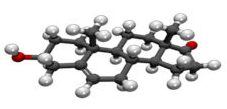
This note is in response to a query regarding PFS (the post-finasteride syndrome) from Dr. Philip Roberts, the patient-support director of the post-finasteride syndrome foundation.
It is offered gratis and in humanitarian interest, as my personal opinion. It is based to some extent on my previous knowledge and experience and bolstered by current information available on the www.
Please bear in mind that I am to be regarded as a well-informed layman: I am not an academic, a recognised expert on functional medicine or any sort of pundit and now post-retirement, I am no longer a registered physician. Therefore my musings amount to speculative suggestion only and should not be construed as instruction or advice to Dr. Roberts, or to PFS sufferers.
DEFINITION / BACKGROUND
Finasteride was patented in 1984 and approved for medical use in 1992. It is available as a generic.
Sold as Proscar, Propecia and other brand names, it was initially used to treat benign prostatic hyperplasia and subsequently hair loss, in men. It can also be used to reduce hair growth in women and as a part of hormone therapy for transgendered females. In 2018, it was the 87th most common medication in the United States, with over 8.9M prescriptions.
Adverse effects from finasteride are said to be rare, however some men experience sexual dysfunction, depression, breast enlargement and or a host of other symptoms, which may persist after stopping the medication (Finasteride may also hide the early symptoms of prostate cancer).
Clinical studies have revealed both high efficacy of treatment and a favorable safety profile, establishing the drug as first-line treatment for male pattern hair loss.
In 2012, Sato and Takeda [1] reported on efficacy and safety of 1 mg oral finasteride for treatment of male pattern hair loss in a very large population study (3,177 Japanese men). 87.1% reported increased hair: 11.1% “greatly”, 36.5% “moderately”, and 39.5% “slightly” increased. Further, the response rate improved with increasing duration of treatment and only 0.7% reported adverse reactions.
THE POST-FINASTERIDE SYNDROME:
PFS has been reported in men who have taken oral finasteride, for either hair loss or BPH. [2,3]
Reported symptoms, including depression, cognitive impairment, loss of libido, erectile dysfunction, reduction in penis size, penile curvature or reduced sensation, gynecomastia, muscle atrophy and severely dry skin, continue despite quitting finasteride. [4] The condition allegedly may have a life-altering impact on sufferers and their families, such as job loss, the break-up of romantic relationships or marriages and suicides.
The Post-Finasteride Syndrome Foundation (www.pfsfoundation.org), a nonprofit organization, is dedicated to helping fund research on the characterization, underlying biologic mechanisms, and treatments of PFS and to improving public awareness of the condition.
The obstacles to finding a solution to the vexing situation in which sufferers find themselves is personified in two online articles, which I have dubbed “A DERMATOLOGIST’S VIEW” [5], paraphrased below and “A Comment on the Post-Finasteride Syndrome” [6], both from Dr Ralph Michel Trüeb, et al.
A DERMATOLOGIST’S VIEW (I have paraphrased this article, in the interest of space).
“Finasteride represented a breakthrough, with high efficacy and safety.
PFS, characterized by sexual dysfunction, somatic symptoms, and psychological disorders, has been claimed to occur in men who have taken oral finasteride. In our opinion, PFS is a “mystery syndrome” like amalgam illness, chemical sensitivity, Morgellons disease, and Koro (fear of the genitals shrinking and retracting into the body): symptoms cannot be explained biologically and frequency of consultation parallels media coverage, indicating suggestibility. Finally, patients hold to their belief system despite rational argument, indicating a delusional aspect to their disorder. We report our first case, with evidence that PFS is delusional, due to histrionic personality. In case of adverse effects, finasteride or dutasteride treatment should be stopped.
Patients are unlikely to benefit from any androgen and attention must focus on treatment of psychopathological disorders and sexual symptoms, with psychotherapy and psychotropic agents depending on the underlying depressive, delusional, or somatoform disorder”.
CONSTRUCTIVE ANALYSIS:
Finasteride is a 5α-reductase inhibitor and therefore an antiandrogen.
By blocking 5α-reductase, it reduces production of DHT (Di-HydroTestosterone) in the prostate and the scalp by about 70%.
Since 5α-reductase is the active enzyme in the synthesis of several anticonvulsant neurosteroids, including allopregnanolone, androstanediol and THDOC, finasteride also inhibits production of those essential hormones. **
Allopregnanolone, androstanediol and THDOC deficiency leads to depression, followed by functional hypothyroidism.
A PTSD/CFS/ME scenario is thus engendered, with devastating depression, subjective helplessness and suicidal ideation.
So let’s think about Allopregnanolone, Androstenediol and THDOC:
ALLOPREGNANOLONE is an antidepressant, anxiolytic, pro-social, anti-anger, pro-libido, soporific and pro-cognitive hormone made in the brain as well as in the adrenal glands.
It is responsible for brain maintenance and repair, including myelin sheath maintenance, nerve connectivity, nurture of new brain cells and memory.
It is mood-enhancing.
It generates endorphins and is anticonvulsive.
It relieves postpartum depression.
Deficiency of Allopregnanolone causes PMDD (PMS) (8), anxiety states, panic attacks and depression. Fluctuations in its blood level plays an important role in the pathophysiology of mood disorders, catamenial epilepsy, MS, Parkinson’s, Alzheimer’s and various other neuropsychiatric conditions.
ANDROSTENEDIOL is an intermediate in Testosterone synthesis from DHEA, so a reduction of its availability will reduce Testosterone levels.
This is not be a major problem for many, but in those who are already “Testosteropenic”, it often leads to a loss of self-confidence (therefore increased anxiety), reduced muscle maintenance, increased fat storage and perhaps an increased tendency to gynecomastia (which some males already have).
THDOC (deoxycorticosterone), is a potent positive allosteric modulator of the GABAA receptor, has sedative, anxiolytic and anticonvulsant effects. Changes in the normal levels of this steroid may be involved in some types of epilepsy (catamenial epilepsy), PMS, stress, anxiety and depression.
As with Allopregnanolone, reducing production of THDOC increases any tendency to anxiety and depression in the short term: time will tell whether long-term effects will be observed.
MY OPINION, IN VERY BRIEF
- Reported effects in affected persons is horrendous and although PFS is rare (relative risk 1.66), it warrants careful analysis and thoughtful consideration.
- Clearly, since the mechanism of action of Finasteride is to inhibit 5α-reductase, which transmutes Progesterone to Allopregnanolone, DOC to THDOC and DHEA to Androstenediol, prescription of Finasteride carries the risk of deficiency of all three Hormones.
- Downregulation of Allopregnanolone lowers mood and reduces self-satisfaction and sense of tranquillity, setting the stage for anxiety and depression. Anxiety and depression are interpreted by the brain as stress and the stress results in cortisol output, which encourages preferential conversion of T4 into rT3. In this scenario Allopregnanolone deficiency produces mood swings and depression, the depression causes anxiety, the anxiety is interpreted by the brain as stress, the brain calls for a stress response, the tissues respond by converting T4 into rT3 instead of actve T3 and a hypothyroid state ensues.
- Therefore PFS is due to idiosyncratic sensitivity to the neurodebilitating effects of ALLOPREGNANOLONE, THDOC, Androstenedione (and possibly other neurosteroid) deficiency, compounded by deep functional hypothyroidism (akin to PTSD and CFS) which serves to increase the anxiety and further suppress Allopregnanolone.
- Regarding non-sexual symptoms of PFS: dry skin, hair loss, muscle aches, adiposity, skewing of the cholesterol balance, reduced cognition, chronic fatigue symptoms, low libido and anxiety with panic attacks are all symptoms of hypothyroidism .
- Impotence can also be a low-T3 effect, as can peripheral neuropathy, pretibial oedema, constipation and innumerable other symptoms.
- NOTES:
(1) regarding DHEA: DHEA production falls 1% per annum from age 25 in all humans and is therefore deficient by age 30. It should be recommended as a supplement, for all.
(2) Progesterone supplementation, at 50mg HS, improves sleep, memory, mood and self-satisfaction in males.
(3) Penile curvature (Peyronie’s disease) must be a coincidental development unrelated to the other PFS effects.
INVESTIGATION
Investigation should include, in addition to routine studies, free Testosterone, IGF, DHEA, Oestradiol, Progesterone, fasting Homocysteine, HSCRP, TSH, free T4 & T3, rT3.
MANAGEMENT
[1] Contact a Metabolic Medicine or Functional Medicine MD, for an opinion re PFS.
[2] Correct Allopregnenolone deficiency with Pregnenolone and Progesterone, at bedtime.
[3] Supply (HS) Melatonin as an adjunct to Allopregnenolone, to improve sleep, mood and anxiety. [4] Supply DHEA (no more than 50mg /day, to avoid aromatisation to Oestrogen: >50mg may raise Oestrogen to female levels, producing gynecomastia and occasionally, painful breast cysts).
[5] Correct the functional hypothyroidism with Triiodothyronine (AKA Liothyronine), titrated up from 10mcg daily in 5mcg increments, to achieve a T3 level between 5.0 and 6.0 Picomoles/Litre. Do not try desiccated thyroid, because 70% of D.T. is T4. The T4 will not raise the serum T3: it will be processed preferentially to rT3. DO NOT PRESCRIBE Eltroxin or Synthroid, for the same reason.
[6] Test for HS CRP, Homcysteine, IGF, Heavy Metals and other markers as seems necessary and treat ad hoc.
[7] Test for T3 weekly, at 4 hours post-dose (Ideal dose time 4AM): because T3’s half-life is only 2-3 hours, there is no need to wait six weeks for re-estimation, as is done for T4, whose half-life is 5 – 7 days.
[8] Titrate Triiodothyronine dose to acheive a Free T3 of between 5.0 and 6.2 Picomoles/Litre. [9] Re-test for rT3 and other parameters later, when the serum T3 is > 5.0 Pm/L. [10] Recommend Vit D, B12, MTHF, NAC, CoQ10, I3C, Zinc, Iron, Magnesium, Selenium, Iodine etc, as necessary.
[11] Prescribe Zuranolone, when it becomes available, as a short-term adjunct to relieve symptoms: do not depend on Zuranolone to supplant the entire protocol because it will not eliminate the underlying cause of the syndrome
SIDE EFFECTS OF T3 OVERDOSE:
The classical side effects of T3 overdose are fast heartbeat, anxiety, hyper-reactivity/anger and “antsyness”, but they usually occur due to spiking of T3 when Cytomel is prescribed.
They are rare when slow-release T3 is taken and do not occur if the dose is titrated slowly to a maximum FT3 of 6.2 Pm/L.
The main effect of mild overdose, with T3 over 6.2 (optimal is 5-6), is feeling “high” ….. a feeling of being “on top of the world”, sharp and optimistic, with sharpened, bright colour vision, enhanced reds and greens and heightened perception.
The main symptom of insufficient dose is afternoon fatigue, with recurrence of hypothyroidism symptoms late in the day.
PROGNOSIS and FOLLOW-UP
I cannot estimate a time-frame for improvement in the patient’s symptoms, but the response to DHEA and Progesterone is usually rapid. Time to improvement in functional hypothyroidism will depend on the patient’s requirement for T3. Follow-up will depend on the subject’s condition, so the time-frame should be discussed between practitioner and patient.
Please note that the bottom-line idea is that PFS, should respond well to treatment with:
DHEA [low dose: 50mg] for general support and Testosterone enhancement.
PROGESTERONE [low dose – 50-100 mg HS] for Allopregnanolone support and
Triiodothyronine, to eliminate Hypothyroidism [T4 makes functional hypothyroidism subjects, male or female, really sick].
PLEASE NOTE THAT I DO NOT PROMISE A GUARANTEED CURE.
REFERENCES
[1] LONG-TERM (10-YEAR) EFFCACY OF FINASTERIDE IN 523 JAPANESE MEN WITH ANDROGENETIC ALOPECIA, Masayuki Yanagisawa1-3, Hiroshi Fujimaki2,4, Akira Takeda1,2, Mitsuru Nemoto1, Takayuki Sugimoto1 and Akio Sato: January 2019 DOI:10.15761/CRT.1000273, https://www.researchgate.net/publication/337105943_Long-term_10-year_efficacy_of_finasteride_in_523_Japanese_men_with_androgenetic_alopecia
[2] Meta-Analysis: Adverse Sexual Effects of Treatment with Finasteride or Dutasteride for Male Androgenetic Alopecia: A Systematic Review and Meta-analysis
Solam Lee 1, Young Bin Lee, Sung Jay Choe, Won-Soo Lee https://pubmed.ncbi.nlm.nih.gov/30206635/
[3] Meta-analysis: Effect of 5α-Reductase Inhibitors on Sexual Function: A Meta-Analysis and Systematic Review of Randomized Controlled Trials, Luhao Liu 1 , Shankun Zhao 1 , Futian Li 1 , Ermao Li 1 , Ran Kang 1 , Lianmin Luo 1 , Jintai Luo 1 , Shawpong Wan 1 , Zhigang Zhao 2: PMID: 27475241 DOI: 10.1016/j.jsxm.2016.07.006 From 493 articles, 17 trials / 17,494 patients were included. 9 trials evaluated 5ARIs in BPH. 8 trials reported 5ARIs in AGA. We included 10 trials (6,779 patients) on Finasteride, 4 trials (6,222 patients) on Dutasteride, and 3 (4,493 patients) on finasteride and dutasteride for AGA.
The relative risks for sexual dysfunction were 2.56 (95% CI = 1.48-4.42) in BPH and 1.21 (95% CI = 0.85-1.72) in AGA; those for erectile dysfunction were 1.55 (95% CI = 1.14-2.12) in BPH and 0.66 (95% CI = 0.20-2.25) in AGA and those for decreased libido were 1.69 (95% CI = 1.03-2.79) in BPH and 1.16 (95% CI = 0.50-2.72) in AGA. Conclusion: 5ARIs were associated with increased adverse effects on sexual function in BPH compared with placebo. However, the association was not statistically significant in men with AGA.
[4] Observational evaluation of 79 young men with adverse effects after finasteride: G Chiriacò 1 , S Cauci 2 , G Mazzon 1 , C Trombetta 1, PMID: 26763726 DOI: 10.1111/andr.12147 https://pubmed.ncbi.nlm.nih.gov/26763726/ Of 79 participants, 40.5% declared erection difficult, and 3.8% never achieved. Orgasm was difficult in 16.5%, and never achieved by 2.5%. 75.9%) had anhedonia, 72.2% lacked mental concentration and 51.9% loss of muscle tone/mass. Most frequent sexual symptoms were low penis sensitivity (87.3%), low ejaculation force (82.3%), and cold penis (78.5%).
[5] https://www.karger.com/Article/Fulltext/497362 Post-Finasteride Syndrome: An Induced Delusional Disorder with the Potential of a Mass Psychogenic Illness? Trüeb R.M.a · Régnier A.a · Dutra Rezende H.a · Gavazzoni Dias M.F.R.b
[6] A Comment on the Post-Finasteride Syndrome, Int J Trichology. 2018 Nov-Dec; 10(6): 255–261.doi: 10.4103/ijt.ijt_61_18, PMCID: PMC6369643 PMID: 30783332Hudson Dutra Rezende, Maria Fernanda Reis Gavazzoni Dias,1 and Ralph Michel Trüeb https://www.ncbi.nlm.nih.gov/pmc/articles/PMC6369643/
[7] Neuroprotective and Antiapoptotic Effects of Allopregnanolone and Curcumin on Arsenic-Induced Toxicity in SH-SY5Y Dopaminergic Human Neuroblastoma Cells, Neurophysiology volume 52, pages 124–133 (2020): H. Khodadadi, G. P. Jahromi, G. Zaeinalifard, M. Fasihi-Ramandi, M. Esmaeili & A. Shahriary https://link.springer.com/article/10.1007/s11062-020-09861-6
[8] Adrenal response to adrenocorticotropic hormone stimulation in patients with premenstrual syndrome: Gynecol Endocrinol. 2004 Feb;18(2):79-87, Lombardi I1, Luisi S, Quirici B, Monteleone P, Bernardi F, Liut M, Casarosa E, Palumbo M, Petraglia F, Genazzani AR. PMID: 15195499, DOI: 10.1080/09513590310001652955, https://www.researchgate.netpublication223979283_ACTH_and_Cortisol_Response_to_DexCRH_Testing_in_Women_with_and_without_Premenstrual_Dysphoria_during_GnRH_Agonist-induced_Hypogonadism_and_Ovarian_Steroid_Replacement
 Hormone Therapy Explained